Practical Guide for Roofing Companies
Roofing Google Business Optimization
Practical GBP optimization patterns that improve map pack relevance and conversion readiness.
Updated
Covers: roofing Google Business optimizationAll Resource Guides
Digital Growth Infrastructure for Roofing Companies
Practical Guide for Roofing Companies
Practical GBP optimization patterns that improve map pack relevance and conversion readiness.
Updated
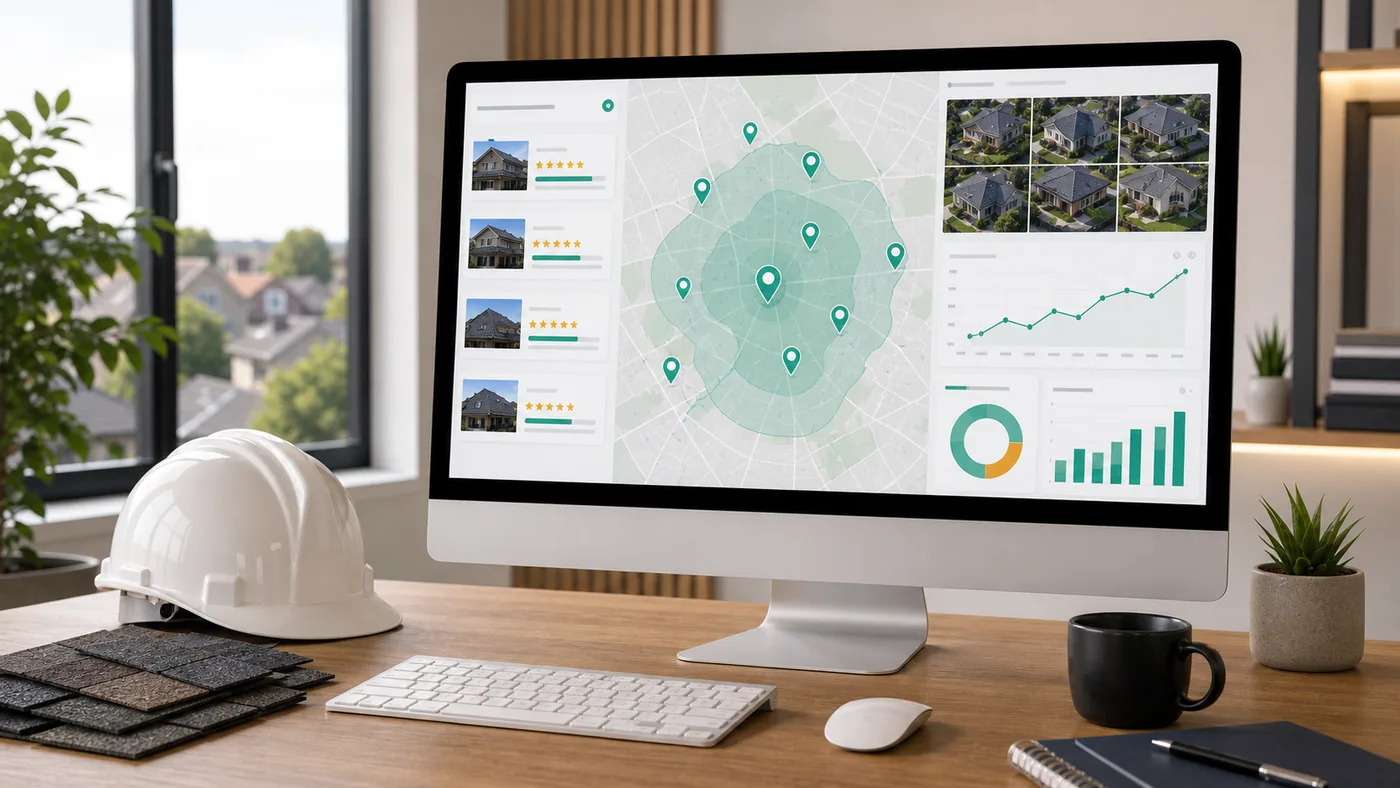
Google Business optimization is a trust and relevance layer that amplifies local intent capture when profile data, media, and response behavior are managed consistently.
Roofing Google Business optimization should make it easier for the right customer to understand the offer, trust the company, and take the next step. Start with the services and markets your team can serve profitably, then build the message and follow-up around those priorities.
The right plan depends on who is buying, what they need, and how your team sells. These are the roofing businesses and situations most likely to benefit from a focused roofing Google Business optimization plan.
Use the phrases below as a plain-language check on what owners, buyers, or customers expect to find. A useful roofing Google Business optimization page should answer the need behind the phrase instead of repeating the wording unnaturally.
Turn the idea into a small set of useful pages, sales assets, and follow-up steps. Every item should help a customer make a decision or help your team move a qualified opportunity forward.
Roofing buyers make fast trust decisions. Clear services, specific proof, useful answers, and an obvious contact path matter more than decorative copy or forced repetition.
Reviews, relevant mentions, local relationships, useful press, and credible website links can reinforce roofing Google Business optimization. Send that trust toward pages that already explain the service well instead of using authority to prop up thin or confusing content.
Roofing Google Business optimization only creates value when the customer can move forward easily. Pair clear offers with visible proof, short contact paths, quick response, and follow-up that helps the buyer make the next decision.
Use a small scorecard to decide whether roofing Google Business optimization is helping the business. Traffic and visibility can explain what is changing, but qualified opportunities, close rate, and profitable revenue should guide the final decision.
| Metric | Benchmark | Why It Matters |
|---|---|---|
| GBP Calls / Direction Requests / Website Clicks | Steady month-over-month growth | Measures real engagement from local search exposure. |
| Review Rating + Recency | Maintain strong average with consistent new volume | Reinforces trust and local ranking strength. |
| Profile Completion and Attribute Coverage | Near-complete profile | Improves relevance interpretation by search systems. |
| Conversion Rate from GBP Traffic | Upward trend after landing-page alignment | Ensures action traffic becomes qualified leads. |
| Response-Time to Reviews and Q&A | Fast and consistent | Signals active business management and customer trust. |
Most weak results come from predictable choices: unclear priorities, disconnected tactics, inconsistent follow-up, or activity that never reaches the sales process. Catch these patterns before they become expensive habits.
Too many roofing teams treat GBP as a profile management task. In reality, it is a conversion surface. Buyers evaluate trust signals directly on the profile before deciding to call, click, or keep searching. That means visual freshness, review quality, and service clarity have direct revenue implications.
The most effective teams run GBP with the same rigor as a landing page. They test link destinations, refresh media by season, and maintain response standards that reinforce professionalism. This turns local visibility into controlled lead flow rather than random call volume.
Weather, competition, home values, building types, drive time, and sales capacity can all change the right roofing Google Business optimization plan. Use local conditions to shape the message and offer instead of copying a national template.
A short, repeatable review rhythm keeps roofing Google Business optimization connected to real sales results and prevents important details from drifting over time.
Marketing should never create avoidable trust, legal, or reputation problems. Review public claims, company details, local pages, and outside placements before they reach customers.
Use the next 90 days to complete the most valuable work in the right order. A smaller finished plan usually creates more value than a long list of half-launched ideas.
Practical GBP optimization patterns that improve map pack relevance and conversion readiness. Choose the first action that removes a real sales or customer bottleneck, assign an owner, and review the result against qualified leads and booked revenue before expanding the plan.
Use these companion guides to answer the next questions that usually come up when roofing teams put this plan into practice.
Related Guide
Work through a roofing SEO checklist for indexing, service pages, Google Business Profile, reviews, and lead tracking, with a practical 30-day plan.
Related Guide
Help nearby homeowners find your roofing company with an accurate Google Business Profile, useful service pages, and genuine customer reviews.
Related Guide
A complete roofer marketing guide for roofing companies that need stronger digital marketing, authority assets, and conversion systems.
Related Guide
Improve roofing landing pages with clear service offers, real project proof, mobile forms, reliable lead delivery, and a test plan for booked inspections.
Deploy productized assets directly from this guide. No consultation required.
Roofing Local SEO Starter Package
$499/month
Recurring local SEO execution for one roofing location.
Start monthly local SEO execution for one roofing location with recurring delivery cadence.
Recurring monthly billing via Stripe.
Explore practical articles on local visibility, response speed, storm inquiries, financing, and follow-up.
May 20, 2026 · 4 min read
Use this local SEO checklist for roofers to improve service pages, Google Business Profile, reviews, keyword focus, and the path from search to inspection.
May 19, 2026 · 3 min read
How roofing companies can build landing pages for replacement, repair, storm, commercial, and city campaigns that convert traffic into booked inspections.
May 18, 2026 · 4 min read
How commercial roofers can create earlier demand with maintenance content, inspection pages, property manager resources, and local authority before buyers request bids.
Most roofing campaigns show directional movement within the first 60-120 days when technical issues are resolved and core pages are deployed, but competitive markets may require longer authority-building windows.
The most common mistakes are shallow page coverage, weak internal linking, low-quality backlink purchases, and tracking dashboards that report vanity metrics instead of qualified pipeline outcomes.
Start with unit economics: target acquisition cost, average job margin, and close rate. Then allocate spend across foundational local SEO, authority assets, and conversion optimization based on expected payback windows.
Yes. Smaller teams can compete by focusing on tightly scoped city-service clusters, disciplined local optimization, and high-quality authority signals instead of broad low-quality coverage.
Track qualified leads, lead-to-inspection rate, close rate, cost per qualified lead, and gross margin by channel. Rankings matter, but revenue-linked KPIs should guide decisions.