Roofing SEO · Local SEO · Checklist · Lead Generation
May 20, 2026 · 4 min read
Updated
Local SEO for Roofers: A Contractor Checklist
Use this local SEO checklist for roofers to improve service pages, Google Business Profile, reviews, keyword focus, and the path from search to inspection.
The Local SEO Checklist in One Pass
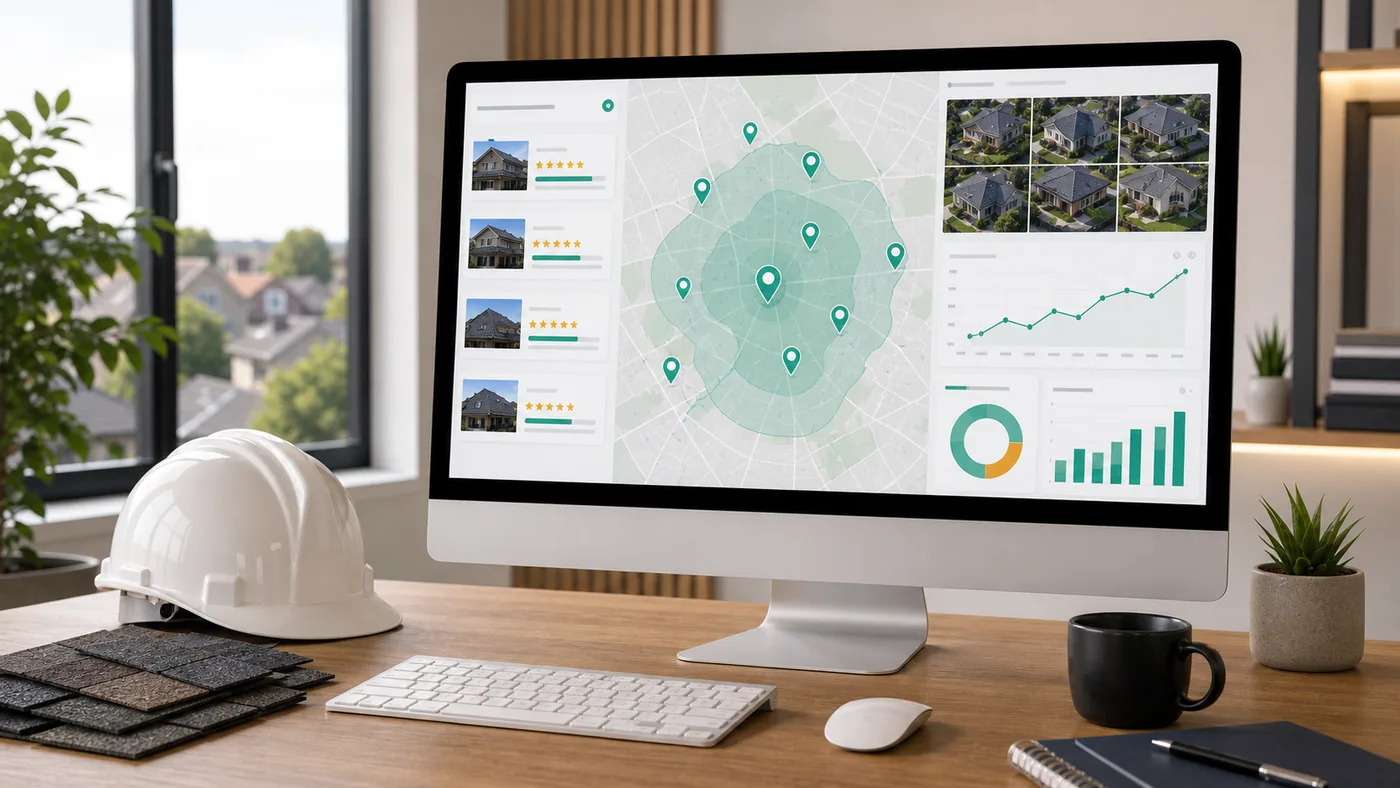
For a local roofer, start with the services and areas your team can actually cover. Confirm your key pages can be indexed, keep your Google Business Profile accurate, show real project proof, request honest customer reviews, and test the phone and form routes into your office.
Treat Google Maps visibility and website search visibility as related but separate work. An accurate profile helps people assess the business; useful service pages explain the work and support the estimate decision. Neither replaces reliable lead handling.
- Check your real business name, category, hours, contact details, and eligible location or service-area setup.
- Review the repair and replacement pages for service detail, local relevance, project proof, and working contact routes.
- Ask completed-job customers for honest reviews without incentives or filtering requests by expected sentiment.
- Link relevant guides and project examples to the service they support.
- Track unique inquiries, qualified opportunities, and booked inspections separately.
How Many Keywords Should a Roofer's Website Target?
There is no fixed count. Give each service page one main customer intent, then cover related wording naturally. A repair page can answer roof leak repair and flashing questions together. Replacement, commercial maintenance, and urgent repair may need different pages because the buyer and next step differ.
Use a service-and-location map before adding pages. Avoid near-identical pages for every variation of roofer, roofing contractor, and roofing company. Check the query-and-page report in Search Console to find which existing page already answers each search need.
Start With Crawlability and Indexation
A roofing SEO checklist should begin with the basics that decide whether search engines can actually process the site. Core service pages, city pages, blog posts, and resource pages need to return clean status codes, load quickly, avoid accidental noindex rules, and appear in the sitemap. If the technical foundation is broken, even strong copy and backlinks have less room to work.
Local contractors should review Search Console coverage, sitemap health, robots rules, canonical tags, page speed, mobile rendering, and internal links before launching more content. This work is not glamorous, but it protects every future page from being published into a weak crawl environment.
Audit the Core Service Pages
Roofing companies usually need clear pages for roof replacement, roof repair, storm damage, inspections, commercial roofing, and any high-margin specialty service. Each page should own a specific intent, answer buyer questions, show proof, and give a simple path to request an inspection or estimate. Generic service pages make it harder to rank and harder to convert.
The page should also connect to local demand. A replacement page can link to priority city pages, financing content, warranty information, and project proof. A repair page can connect to emergency leak, storm, and service-area content. Internal linking turns separate pages into a search system.
Tighten Google Business Profile Signals
For local roofers, Google Business Profile work belongs inside the SEO checklist. Business categories, service areas, hours, photos, services, reviews, Q&A, and profile consistency all influence how buyers interpret the company before they ever reach the website. A strong website with a neglected local profile leaves money on the table.
The checklist should include weekly review monitoring, monthly photo updates, service verification, duplicate profile checks, and consistency between profile copy and website service pages. Local SEO improves when the profile and the site reinforce the same market and service priorities.
Review Proof and Conversion Paths
SEO traffic only matters when the page can turn visitors into qualified opportunities. Roofing pages should place reviews, certifications, project examples, warranty details, financing cues, and process clarity near calls to action. Buyers are making a trust decision, not just reading a keyword page.
Every important page should have visible phone access, a mobile-friendly form, clear next steps, and enough qualification to help the office route the lead. If a page ranks but the form is vague or the next step is unclear, the checklist is not finished.
Measure SEO by Qualified Pipeline
The final checklist step is measurement. Rankings, impressions, and traffic are useful diagnostics, but roofing owners need to know whether SEO produces qualified calls, booked inspections, estimates, and closed revenue. Without source-level tracking, the team can mistake visibility for performance.
A simple monthly scorecard should include organic leads by page, lead-to-inspection rate, close rate, revenue by source, top moving queries, page updates shipped, and authority work completed. That keeps SEO accountable to real growth instead of a busy report.
Related Resource Guides
Go deeper on the planning, measurement, and implementation choices behind this topic.
In-Depth Guide
Roofing SEO Checklist: Website, Google Maps, and Reviews
Work through a roofing SEO checklist for indexing, service pages, Google Business Profile, reviews, and lead tracking, with a practical 30-day plan.
In-Depth Guide
SEO for Roofing Companies
How roofing companies build sustained visibility with local intent coverage, authority links, and structured conversion paths.
In-Depth Guide
Roofing Google Business Optimization
Practical GBP optimization patterns that improve map pack relevance and conversion readiness.
In-Depth Guide
Roofing Search Engine Rankings
Ranking model for roofing keywords using authority, technical SEO, and topical coverage.
Get Help Putting This Into Practice
Choose a productized service when you want the plan completed for your roofing business.
Related Roofing Articles
Continue with practical articles for roofing owners and growth teams.
May 19, 2026 · 3 min read
Roofing Landing Pages That Book More Inspections
How roofing companies can build landing pages for replacement, repair, storm, commercial, and city campaigns that convert traffic into booked inspections.
May 18, 2026 · 4 min read
Commercial Roofing Lead Generation Before the RFP
How commercial roofers can create earlier demand with maintenance content, inspection pages, property manager resources, and local authority before buyers request bids.
May 11, 2026 · 3 min read
Roof Repair Leads: Capture Urgent Demand Without Wasting Sales Time
A roof repair lead-generation framework for capturing urgent roofing demand while filtering low-fit requests and protecting response capacity.