Landing Pages · Conversion · Roofing SEO · Lead Generation
May 19, 2026 · 3 min read
Roofing Landing Pages That Book More Inspections
How roofing companies can build landing pages for replacement, repair, storm, commercial, and city campaigns that convert traffic into booked inspections.
One Landing Page Should Own One Job
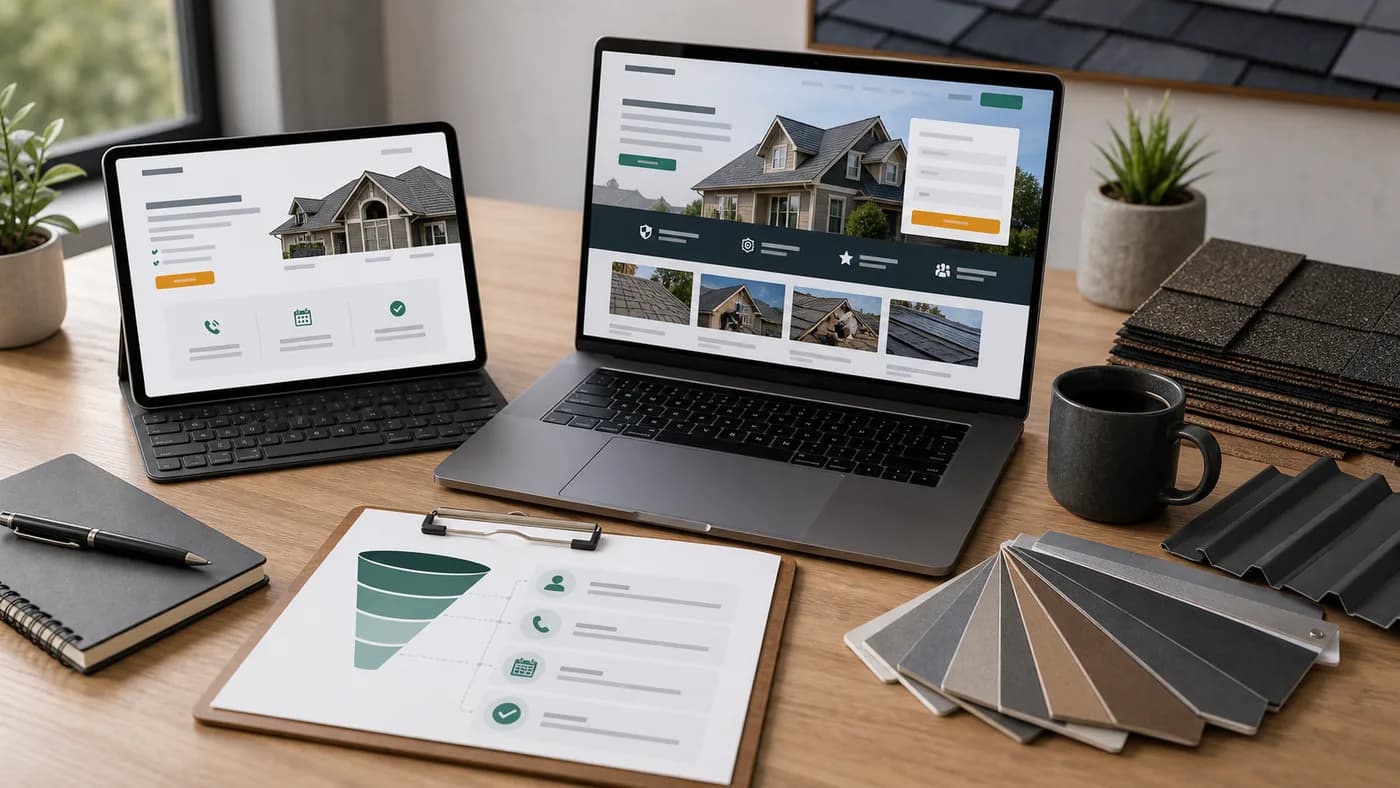
The strongest roofing landing pages are specific. A roof replacement page should not try to be a repair page, a storm page, a financing page, and a commercial page all at once. When the intent is clear, the headline, proof, form, photos, FAQs, and follow-up message can all support the same buyer decision.
This matters for SEO and paid traffic. Search engines understand pages more easily when intent is focused, and buyers convert more readily when the page feels built for their situation. Specificity is not a copywriting trick; it is the structure that keeps conversion friction low.
Put Trust Before the Form
Roofing leads involve risk. Homeowners and property managers want to know whether the contractor is credible before they hand over contact information. Reviews, local proof, certifications, warranty signals, project photos, and process clarity should appear before or near the first strong call to action.
Trust proof should be concrete. A generic badge stack is weaker than a review that mentions a full replacement, leak response, commercial maintenance issue, or storm documentation process. The closer proof gets to the buyer's actual concern, the harder it works.
Match the Form to the Urgency
An emergency repair page needs a shorter and faster conversion path than a planned replacement page. A storm page may need active leak status and location. A commercial page may need property type, square footage, timeline, and decision-maker context. Asking the wrong questions can either scare off good leads or create messy intake.
The best forms collect enough information for the next step without turning the page into an interview. Name, phone, service area, issue, timing, and preferred contact method are usually enough for a first residential inquiry. Commercial and complex projects can justify a few more fields when the page explains why they matter.
Use FAQs to Remove Sales Objections
Landing page FAQs should not be filler. They should answer the questions that stop buyers from requesting an inspection: cost, financing, timing, insurance process, warranty, materials, minimum fees, service area, and what happens after submission. Good FAQs make the buyer feel oriented.
These FAQs also support SEO because they add crawlable language around real roofing intent. The goal is not to stuff keywords into question boxes. The goal is to capture buyer language and connect it to clear next steps.
Build Internal Links Around the Landing Page
A landing page performs better when it sits inside a cluster. A replacement landing page can link to financing, warranties, city pages, materials, and estimate follow-up content. A commercial landing page can link to maintenance, coatings, flat roof repair, inspections, and facility manager resources.
Internal links help users keep moving and help search systems understand the page's role. They also spread authority more intelligently when backlinks or press campaigns point into the cluster.
Track Booked Inspections, Not Just Form Fills
The real test of a roofing landing page is whether it produces booked inspections and profitable jobs. A high form conversion rate can still be weak if the page attracts bad-fit requests. That is why every landing page should be measured through the CRM, not only analytics software.
Track source, page, service type, lead quality, booked inspection rate, close rate, and revenue. Once that loop is visible, landing page optimization becomes much more precise. The company can improve the pages that create margin and stop scaling the pages that only create activity.
Related Resource Guides
Go deeper on the planning, measurement, and implementation choices behind this topic.
In-Depth Guide
Roofing Landing Page Optimization for Better Inquiries
Improve roofing landing pages with clear service offers, real project proof, mobile forms, reliable lead delivery, and a test plan for booked inspections.
In-Depth Guide
Roofing Conversion Optimization
How roofers increase booked jobs from existing traffic through UX, offers, and lead funnel adjustments.
In-Depth Guide
Roof Replacement Leads
A high-intent roof replacement leads guide for roofing companies that want better service pages, stronger city targeting, and more qualified estimate requests.
In-Depth Guide
Roof Repair Leads
How roofers capture roof repair leads from urgent search intent while filtering low-quality inquiries and protecting sales-team time.
Get Help Putting This Into Practice
Choose a productized service when you want the plan completed for your roofing business.
Related Roofing Articles
Continue with practical articles for roofing owners and growth teams.
May 11, 2026 · 3 min read
Roof Replacement Leads: Build Pages That Attract Better Roofing Jobs
How roofing companies can win better roof replacement leads with service pages, city intent, financing content, proof, and faster follow-up.
May 20, 2026 · 4 min read
Local SEO for Roofers: A Contractor Checklist
Use this local SEO checklist for roofers to improve service pages, Google Business Profile, reviews, keyword focus, and the path from search to inspection.
May 18, 2026 · 4 min read
Commercial Roofing Lead Generation Before the RFP
How commercial roofers can create earlier demand with maintenance content, inspection pages, property manager resources, and local authority before buyers request bids.